Behavior • 11 min read
Puppy Schedule: 8 Weeks to 6 Months — Feeding, Potty, Naps and Vaccines (Printable Routine)
We may earn a commission from links on this page. It never changes our editorial advice, and KinPet is not paid to recommend a treatment for your pet.
The 30-second answer
Puppies need structure more than anything else you can buy them. The skeleton of a working schedule: potty on every transition (wake, eat, play, before sleep — plus roughly every hour awake for young puppies, since they hold it about one hour per month of age); three to four meals a day dropping to two by six months; 18–20 hours of sleep per day — enforced, because an overtired puppy bites harder, cries more and learns worse; vaccine visits at roughly 8, 12 and 16 weeks; and socialization starting immediately, because the critical window for positive new experiences closes around 14–16 weeks — earlier than most vaccine series finish, which means the two run in parallel, not in sequence. Print the routine, stick it to the fridge, and run it consistently: puppies learn patterns, not plans.
The master schedule (adapt the times, keep the rhythm)
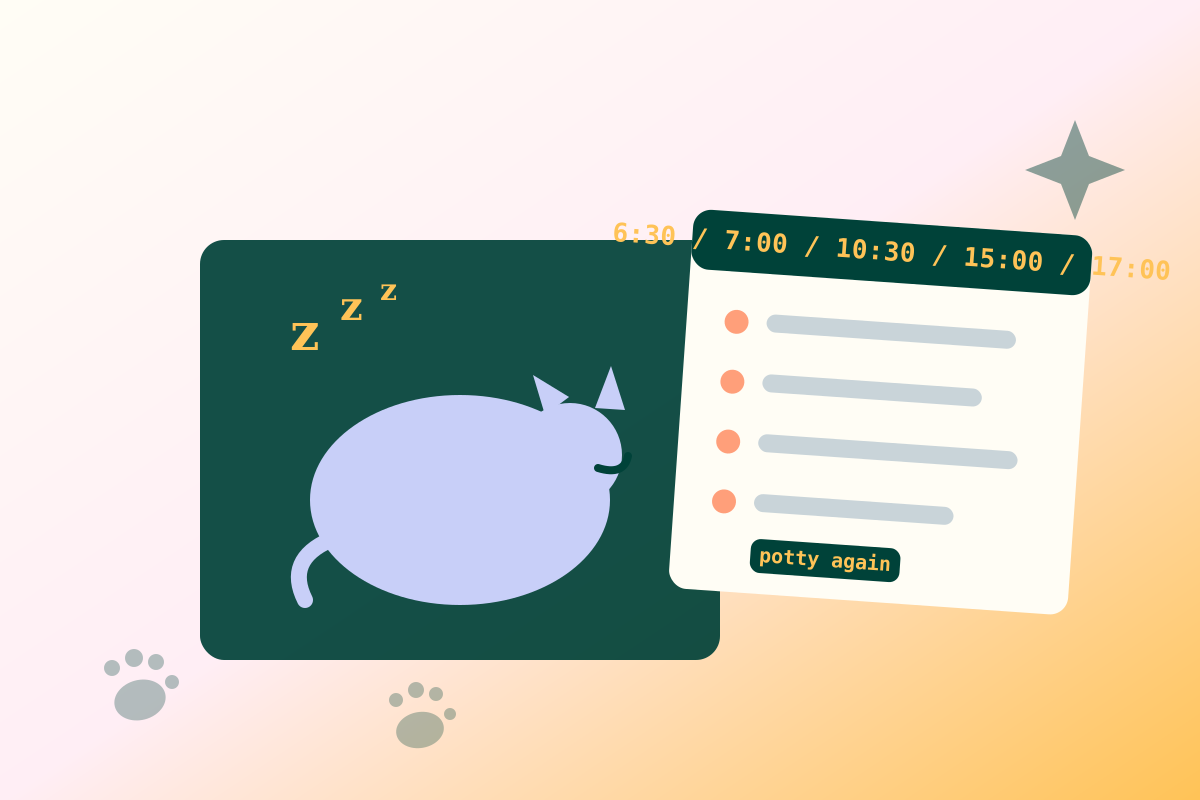
This is the structure that works for most 8–16-week-old puppies, with your times shifted to your life: 6:30 — wake, straight outside to potty, praise when it happens. 7:00 — breakfast, then outside again 10–15 minutes later (eating triggers the digestive reflex). 7:30–8:30 — supervised play and training in short bursts (a puppy's attention span is minutes; five two-minute sessions beat one twenty-minute one). 8:30 — potty break, then crate or pen for a morning nap (1–2 hours). 10:30 — wake, outside, play, water. 12:00 — lunch (if under 4 months), potty. 12:30–15:00 — afternoon nap. 15:00 — wake, outside, play and training. 17:00 — dinner, potty. 18:00–19:30 — calm family time, gentle handling, maybe a stuffed Kong in the crate. 20:00 — light potty trip. 22:00 — last potty, crate, sleep through (young puppies may still need one 2 a.m. outing — it fades by 12–16 weeks). The transitions are the training: puppy learns that wake→potty, eat→potty, play→potty is how life works.
Potty training: the three rules that do all the work
Rule one: the location does the teaching. Take the puppy to the same spot, on leash, every time — the smell memory does more than any command. Rule two: the reward must arrive within two seconds of finishing, delivered on the spot — a treat handed out back inside the house rewards the walk back, not the potty. Rule three: interrupt quietly, clean properly. Catching a mid-accident: scoop and go outside without drama. Finding one later: clean with an enzymatic cleaner (regular cleaners leave scent traces that mark the spot as a toilet) and never punish — punishment teaches puppies to hide, which turns accidents into invisible ones and sets back the trust that housetraining runs on.
Feeding: frequency by age, and the portions most owners overfill
8–12 weeks: four meals a day of puppy-formulated food. 3–6 months: three meals. 6–12 months: transition to two. Portions come from the bag's chart as a starting point, but the true check is body condition — ribs feelable, visible waist — and the vet scale at each vaccine visit. Two food notes from the vet world: keep treats under 10% of calories from day one (puppies learn treat dependency before they learn sit), and transition any food change over a week — puppy stomachs are the classic example for our diarrhea guide, and sudden switches are the most common cause of the most common puppy complaint.
Sleep: the 18–20 hours nobody warns you about
Puppies need 18–20 hours of sleep a day — most owners, warned about midnight potty trips, are not warned that a puppy should nap most of the day. The overtired puppy is the classic complaint behind 'my puppy is biting like a shark and won't stop crying': the truth is usually that a fully awake, overstimulated puppy has missed three naps. Enforce naps in the crate or pen — an hour or two after every active block, especially in the evening when the 'puppy zoomies and meltdown' hour hits. Sleep is when the day's learning consolidates; a rested puppy is a different, calmer, smarter animal than the same puppy at hour five of being awake.
Vaccines and the vet: the three-visit rhythm
The core vaccine series (DHPP) runs on a three-dose rhythm around 8, 12 and 16 weeks, with rabies usually at 16+ weeks — your vet sets the exact dates; the schedule is not optional and not guessable, because maternal antibodies interfere with early doses (which is why the series exists at all). Add the annual visit to the calendar and the monthly heartworm-flea-tick prevention your vet will start early — the heartworm and parasite prevention guides cover why those start young and never pause. Ask your vet at every visit what changed: weight trend, stool, teeth, behavior — the first six months of records become the baseline for the next fifteen years.
Socialization: the deadline that runs ahead of the vaccines
The single most time-sensitive item on this page. The critical socialization window — when a puppy's brain files 'safe' or 'threatening' about the world — closes roughly at 14–16 weeks, before the vaccine series finishes. AVMA behavior guidance and most vets now agree on the modern approach: carry the strategy — puppies can safely experience the world from your arms, a stroller or a wagon before full vaccination: different people (hats, beards, kids, umbrellas), surfaces (grass, tile, metal grates, stairs), sounds (traffic, dishwashers, thunder recordings at low volume), handled paws, ears and mouth gently every day. The math that matters: a hundred small positive exposures before 16 weeks is the cheapest behavioral insurance in the entire puppy project, and behavioral surrender is a leading cause of shelter intake — socialization is not a luxury item. Pair every new thing with treats and calm; the goal is 'new is interesting', never 'new is scary'. Puppy classes that require vaccination records and occur on clean floors are considered low-risk and high-value by most vets — ask yours.
Biting, crate and alone-time: the three skills of month three
Mouthing is normal (puppies explore with teeth) and managed by consistency: yelp-free redirection to a toy every time, enforced naps when the biting escalates (an overtired shark is a sleepy puppy in disguise), and never rough play with hands. Crate training runs on the same positive economics: meals in the crate, treats thrown in, door open at first, never the crate as punishment — the crate becomes the bedroom, not the jail. Alone-time training starts in week one at five minutes and scales up gradually, following the alone-time table — a puppy who learns early that departures are boring and returns are routine never has to unlearn separation panic.
FAQ
When can my puppy sleep through the night? Most puppies manage 6–8 hours of night sleep by 12–16 weeks, with the last potty trip late and one 2 a.m. outing fading out in that window. Keep the crate near your bed early on — proximity reduces crying.
My puppy cries in the crate — do I let it cry? Check needs first (potty, too hot, hunger), then let the short protest happen — but escalating panic means the crate training moved too fast. Go back a step: meals and naps with the door open.
When do I switch from four meals to two? Around six months, gradually over a week. Large and giant breeds stay on puppy formula longer (12–18 months) — ask your vet, because calcium balance matters for big-breed growth.
Is it safe to walk my puppy before vaccinations are done? Walking in your own clean yard: generally fine. Public sidewalks and parks: wait for the vaccine series' protection, and use carried socialization instead — the socialization window closes before the vaccines do, so experience the world from your arms in the meantime.
How do I stop the biting? Enforced naps first (overtired bites), redirect to a toy every time, end play when teeth land on skin, and never use your hands as toys. It fades as adult teeth arrive around 4–6 months.
What do I do if my puppy has diarrhea? Puppy diarrhea dehydrates fast — read the puppy section of our diarrhea guide and call the vet promptly, especially under 16 weeks, when parvovirus is a live risk until the series is complete.
Stories about pets, product, and care
Back to blog