Health • 12 min read
Foods Dogs Can't Eat: The Evidence-Based List (Beyond Chocolate and Grapes)
We may earn a commission from links on this page. It never changes our editorial advice, and KinPet is not paid to recommend a treatment for your pet.
The 30-second answer
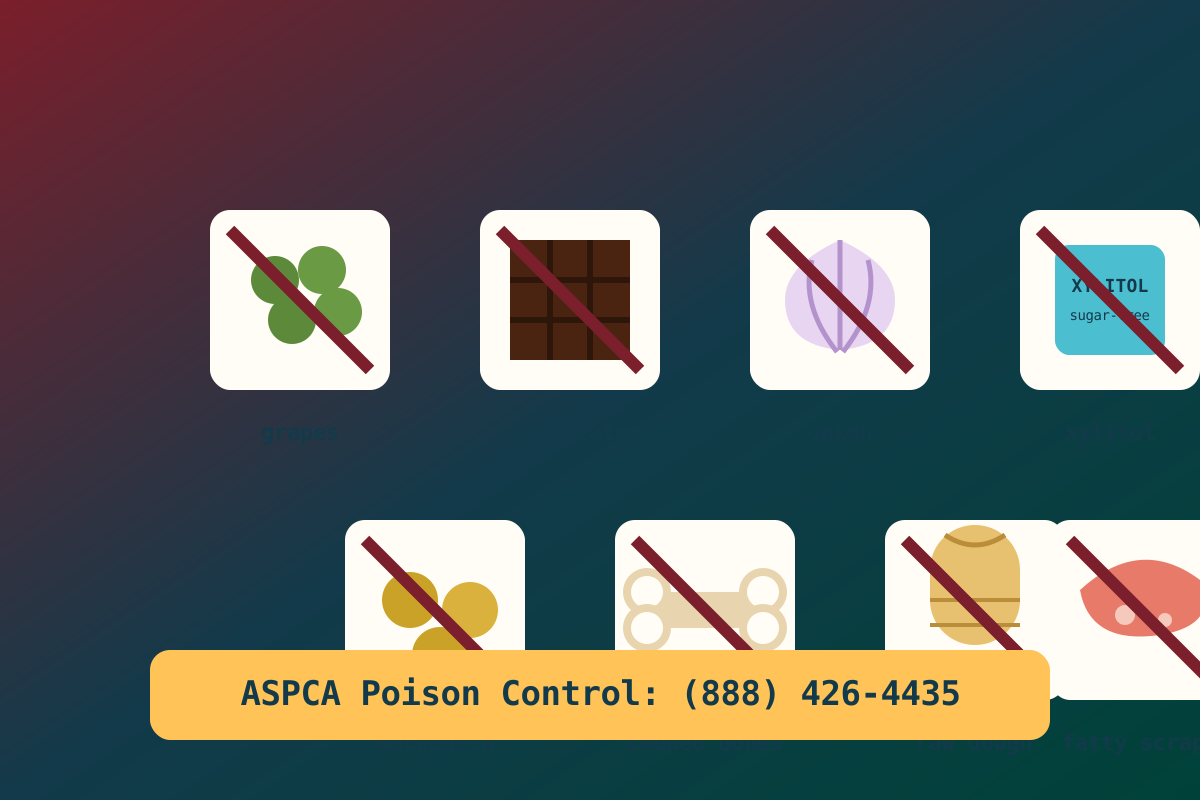
Save this number first: ASPCA Animal Poison Control, (888) 426-4435 (available 24/7; a consultation fee applies). It is the correct first call for any known or suspected toxic ingestion — before home remedies, before induced vomiting, before waiting. The foods that send dogs to the ER most: xylitol (the artificial sweetener hiding in sugar-free gum and many peanut butters — small amounts cause hypoglycemia and liver failure), grapes and raisins (unpredictable kidney failure; no safe dose is established), chocolate (the darker, the deadlier), onions and garlic (delayed red-blood-cell damage), macadamia nuts, alcohol and raw yeast dough, and high-fat scraps that trigger pancreatitis. Dose scales with your dog's weight — a 60-pound lab and a 6-pound chihuahua are different patients after the same cookie. When in doubt, call; poison control triages by species, weight, ingredient and time.
Xylitol: the one every household underestimates
Xylitol is a sugar substitute common in sugar-free gum, mints, candies, some peanut butters (check labels for 'no sugar added'), baked goods and even some dental products. In dogs it does two things fast: triggers a massive insulin release (hypoglycemia within 15–60 minutes — vomiting, weakness, wobbliness, collapse or seizures) and, at higher doses, acute liver failure with a delayed onset of a day or more. The dose that harms is small: a couple of pieces of sugar-free gum can seriously injure a small dog. Its popularity as a 'sugar-free' sweetener keeps it in purses, coat pockets, gym bags and counter bowls — which is exactly where dogs forage. If a dog eats anything sugar-free and the label lists xylitol, that is a poison-control call, immediately — even if the dog currently looks fine, because the hypoglycemic crash can be anticipated and managed when treatment starts early.
Grapes, raisins and currants: no safe dose has ever been established
Grape toxicity is the strangest entry on the list: the toxic agent remains unidentified, and the reaction is idiosyncratic — some dogs eat a bunch and are fine, others develop acute kidney failure from a handful of raisins. Because the unpredictable victims cannot be predicted, the clinical rule is blunt: any confirmed grape, raisin, sultana or currant ingestion is a poison-control call and usually aggressive treatment — decontamination and IV fluids — not watchful waiting. The sneaky vectors: raisins in baked goods, granola, trail mix and the bottom of a toddler's snack cup. Signs of kidney injury (increased thirst and urination shifting to none, vomiting, lethargy) appear one to three days later — by which point the damage is already done. Early is everything.
Chocolate: the darker, the worse (and the math of milligrams)
Chocolate toxicity comes from theobromine and caffeine, and the concentration climbs with darkness: white chocolate is nearly harmless, milk chocolate is the common mild case, dark and baker's chocolate are the dangerous ones, and cocoa powder sits near the top. Toxic effects start at roughly 20 mg of theobromine per pound of dog — one ounce of baker's chocolate is a crisis for a 20-pound dog, while the same ounce of milk chocolate is usually only GI upset. Signs: vomiting, diarrhea, restlessness, racing heart, tremors, seizures — and the window to decontaminate is the first hour or two, before theobromine is absorbed. The practical version: know the type, know the amount eaten, know your dog's weight, and call poison control with all three.
The Allium family: damage that arrives three days late
Onions, garlic, leeks, chives and scallions — raw, cooked, or powdered — damage canine red blood cells, producing hemolytic anemia. Two features make it sneaky: the damage is cumulative and delayed (a small amount with dinner, repeated, adds up; weakness, pale gums and dark urine appear days later), and cats are several times more sensitive than dogs (garlic powder in baby food or broths marketed for cats is a classic exposure). Japanese and Chinese cooking, onion soup mix and leftover stir-fry are the usual vectors. There is no antidote — severe cases need transfusions — so the prevention is kitchen discipline: the scraps bowl is not a shared bowl.
The rest of the serious list, in one pass
Macadamia nuts — weakness, tremors, hind-leg wobbliness within 12 hours; scary-looking, usually self-resolving, still a poison-control call. Alcohol — dogs are tiny relative to doses humans find trivial; raw yeast dough is a double threat (ethanol as it ferments, expansion as it rises in the warm stomach). Caffeine — coffee grounds and energy drinks pack stimulant doses into small volumes. Moldy food from the trash — tremorgenic mycotoxins cause severe tremors and seizures ('garbage gut' meets toxin). Cooked bones — splinter into GI perforations; raw weight-bearing bones fracture teeth. Very fatty scraps — ham trimmings and bacon grease are pancreatitis triggers, the overnight ER visit that starts innocently at dinner. Salty ham alone can also set off dangerous sodium imbalance in small dogs. And the toxins that are not food but live in kitchens: raisin-containing granola bars, xylitol gum dropped from a purse, medication dropped on the floor.
The first ten minutes after ingestion
One: call ASPCA Animal Poison Control (888) 426-4435 or your vet — with the ingredient and amount, your dog's weight, and the time since ingestion. Two: do not induce vomiting unless a professional directs it — hydrogen peroxide harms some dogs and is wrong for corrosives, sharp objects and petroleum products; 'making them throw up' without guidance causes a second emergency. Three: keep packaging — labels tell poison control the exact concentration. Four: if vomiting is directed and performed, collect a sample for the clinic. Five: follow the plan poison control gives — which is sometimes 'stay home and monitor', because not every ingestion is a crisis and the professionals are the ones who can tell the difference. The ASPCA line exists precisely so that the cost of a consultation never becomes the reason a preventable poisoning runs its course untreated.
FAQ
Are grapes worse than chocolate? They injure different organs — grapes hit kidneys unpredictably (no established safe dose), chocolate's risk scales with darkness and dose. Both warrant immediate poison-control calls.
Is one grape enough to hurt my dog? Possibly. The reaction is idiosyncratic — some dogs tolerate grapes, others crash — and no threshold has been identified. The standard of care is treatment, not observation.
My dog ate a small piece of onion last night and seems fine — is it over? Not necessarily: Allium damage is delayed, cumulative and shows up as anemia days later. Report it; repeated small exposures are the classic pattern.
Why is xylitol everywhere now? It is a popular sugar substitute in gums, mints, 'no sugar added' spreads and bakery items. Read the ingredient label of anything sugar-free in the house — the word xylitol (sometimes 'birch sugar') is the tripwire.
How do I make my dog vomit at home? You don't — not without professional direction. Inducing vomiting is wrong for corrosives, sharp objects and certain toxins, and the method matters. Poison control or your vet decides; hydrogen peroxide is sometimes directed, with specific dosing — never improvised.
What about cats? Everything above is worse for cats in different proportions — onions and garlic are far more toxic to cats, and cats' pickiness is their main protection. The lilies in the bouquet, though, are lethal to cats with no dog comparison: keep lilies out of cat households entirely.
Stories about pets, product, and care
Back to blog