Behavior • 11 min read
Dog Anxiety When Left Alone: Signs, Training Plan, and What Doesn't Work
We may earn a commission from links on this page. It never changes our editorial advice, and KinPet is not paid to recommend a treatment for your pet.
The 30-second answer
Separation distress shows up within minutes of your departure, not hours into the day: destruction concentrated at doors and windows, howling in the first half hour, drool puddles, house soiling in a house-trained dog, escape attempts that break teeth and nails. The diagnosis tool is a camera — watch the first thirty minutes after you leave. What does not work, despite being the standard advice: getting a second dog, punishing the destruction, more crate time, and just ignoring it. What works is a gradual desensitization program to your departure cues, anti-anxiety medication from your vet in moderate-to-severe cases (two drugs are FDA-approved for canine separation anxiety), and environmental management while the training runs. This is a treatable condition — and one of the leading reasons dogs are surrendered, which is why treating it matters.
Is it separation distress, or just boredom? The camera decides
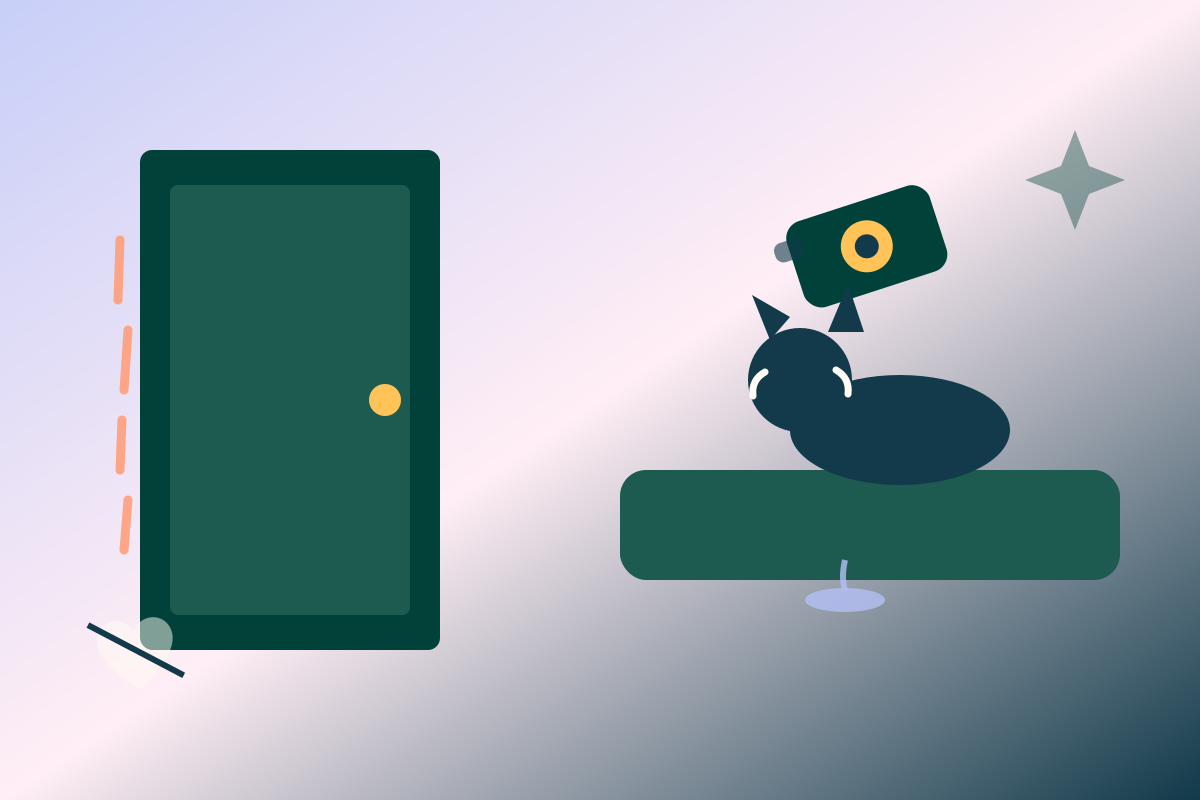
The two problems overlap but have different signatures and different solutions. Boredom builds slowly: chewing spreads across the day, targets random objects, and the dog settles once exercised. Separation distress is time-stamped: it starts within minutes of your leaving, concentrates on exit points (scratching door frames, breaking window blinds), and comes with a distinct soundtrack — continuous howling or barking with a distress quality, not occasional alarm barks. Physiological tells: drool puddles by the crate or door, house soiling in a reliably house-trained dog, self-injury from escape attempts. A $30 camera or your phone on a tripod for one departure answers the question that guesswork cannot — film it, watch it, and you know which problem you are solving.
What causes it (and what does not)
The strongest associations in the research: dogs rehomed or with a history of abandonment events, changes in the household (a family member leaving, a move), and — notably from the pandemic era — dogs whose owners never left the house for a year and then returned to offices. But plenty of dogs develop it with no dramatic history at all, and genetics plays a real role. What does NOT cause it: your dog loving you too much. It is a panic response — the departure-cue chain (keys, shoes, coat) predicts being left alone, and alone means the dog's alarm system fires and does not turn off until you return. Understanding it as panic reframes the treatment: you do not punish panic, you retrain the prediction.
What does not work — the standard advice, debunked
Get another dog. The most commonly offered bad advice. The anxious dog is not lonely — it is specifically panicked about your absence; a second dog often learns the first dog's distress or creates two problems. Punish the destruction. Punishment after the fact teaches nothing (dogs do not connect delayed punishment), and punishment during the return channels panic into fear of your return — making the core problem worse. More crate. For a dog that panics, crates amplify: escape attempts that break nails and teeth happen inside crates, and the association deepens. Crates work for containment, not for panic. 'Just ignore the dramatics.' Ignoring teaches nothing about being alone; the dog is not performing, it is suffering.
The training plan: departures, de-dramatized
The core of behavioral treatment is desensitization to the departure ritual, run in small steps the dog never notices. The insight: the panic is a conditioned chain — keys jingle, shoes squeak, coat moves, door closes — and each link has become a fire alarm. The training breaks the chain: pick up keys, then sit back down and read. Touch the shoes, walk to the door, touch the handle, and return to the couch. Door closes for three seconds, reopen, no fanfare. Build from seconds to minutes across days, each step repeated until the dog stays calm, then a slightly longer one — and vary everything (real departures at random times, in different clothes, with breakfast scrambled in between) so no single sequence predicts doom. Calm behavior during the step gets a quietly delivered treat; signs of distress mean the step was too big — drop back. The program is slow because the dog's threshold sets the pace, not your calendar; pushing past threshold once can undo a week.
Run alongside it, the environmental floor: departure-state exercise (a physically and mentally tired dog starts the day calmer — a sniffing walk beats a jog for this), long-lasting food work reserved only for absences (a frozen stuffed Kong that appears only when you leave starts building a new association), departure and arrival neutrality (no emotional goodbyes or reunions — quiet, boring, repeated), sound cover, and a safe zone where the dog has never had a bad experience. In severe cases, the household may need interim management — daycare, a walker, working from another room, leaving the dog with a friend — while the training moves the threshold.
When to bring in medication — and why that is not defeat
For moderate-to-severe cases, medication is not the last resort; it is part of the standard of care, and it exists because panic blocks learning: a dog in full panic cannot absorb a desensitization program, the same way a person mid-panic-attack cannot practice relaxation. Two medications are FDA-approved specifically for canine separation anxiety (fluoxetine and clomipramine), and vets commonly add situational support for actual departures. The pattern behaviorists see: dogs on the right medication plus the training program improve markedly more than with training alone — and many eventually taper off. Ask your vet; if the panic includes self-injury, ask for a referral to a board-certified veterinary behaviorist (DACVB). There is no medal for white-knuckling a dog through panic.
The FAQ
How long does the training take? Mild cases: weeks. Severe: months, run in small daily steps. The camera tells you the truth about progress — fewer minutes of distress, lower intensity — when your memory wants to say 'no change'.
Do calming supplements work? The evidence for most over-the-counter calming products is thin; some pheromone-based products have modest support and can be a low-risk addition, not a treatment. The FDA-approved medications and the training program are the evidence-based core.
Is it cruel to medicate a dog for anxiety? Panic is a physiological state, and untreated panic self-reinforces. Reversible, vet-supervised medication that lowers the panic enough for learning to happen is treatment, not sedation.
My neighbor says the dog howls all day — but only when I leave. Is that the same thing? Continuous vocalization timed to your departure is the signature of separation distress, and 'all day' suggests it is not resolving once it starts. That is a vet-and-behaviorist case, and possibly a midday-care interim.
Will a second dog fix it? No — this is the most common failed strategy. The anxious dog is not bored of being alone; it is panicked about being away from you specifically. A second dog sometimes absorbs the training budget and doubles the household's problem.
Stories about pets, product, and care
Back to blog