Health • 11 min read
Litter Box Problems: Why Your Cat Stopped Using It (and the Fix That Works)
We may earn a commission from links on this page. It never changes our editorial advice, and KinPet is not paid to recommend a treatment for your pet.
The 30-second answer
Litter box problems — not allergies, not moving — are the leading behavioral reason cats are surrendered to shelters, and the large majority of cases resolve with environmental changes. The checklist that fixes most cases: one litter box per cat, plus one; unscented, fine, clumping litter; boxes scooped daily; boxes that are large, uncovered, and on every floor of the house; placed in quiet but not trapped locations. And before any of that: rule out medical causes — a cat peeing outside the box may have a urinary tract problem that hurts, and a male cat straining without producing urine is a same-hour emergency (a blocked urethra becomes fatal within roughly 24–48 hours). The fix usually works. The sequence matters: medical first, environment second, behavior third.
Why the cat stopped: the medical causes that come first
Cats do not act out of spite. The first questions a vet asks are medical, because several painful conditions present as litter box avoidance: feline idiopathic cystitis (bladder inflammation, often stress-triggered, extremely common and genuinely painful — the cat may associate the box itself with pain and avoid it even after the flare), urinary crystals or stones, a urethral blockage (males especially — straining, crying in the box, producing nothing: emergency room now), constipation, and arthritis in senior cats who simply cannot climb the high-sided box anymore. Recent changes in drinking, urination volume, or straining make the vet visit non-optional. The Cornell Feline Health Center's guidance on inappropriate elimination starts with this exact triage: behavior is diagnosed after medicine, not instead of it.
The environment checklist — the math and the mechanics
Run this list honestly; most failing households fail several items at once:
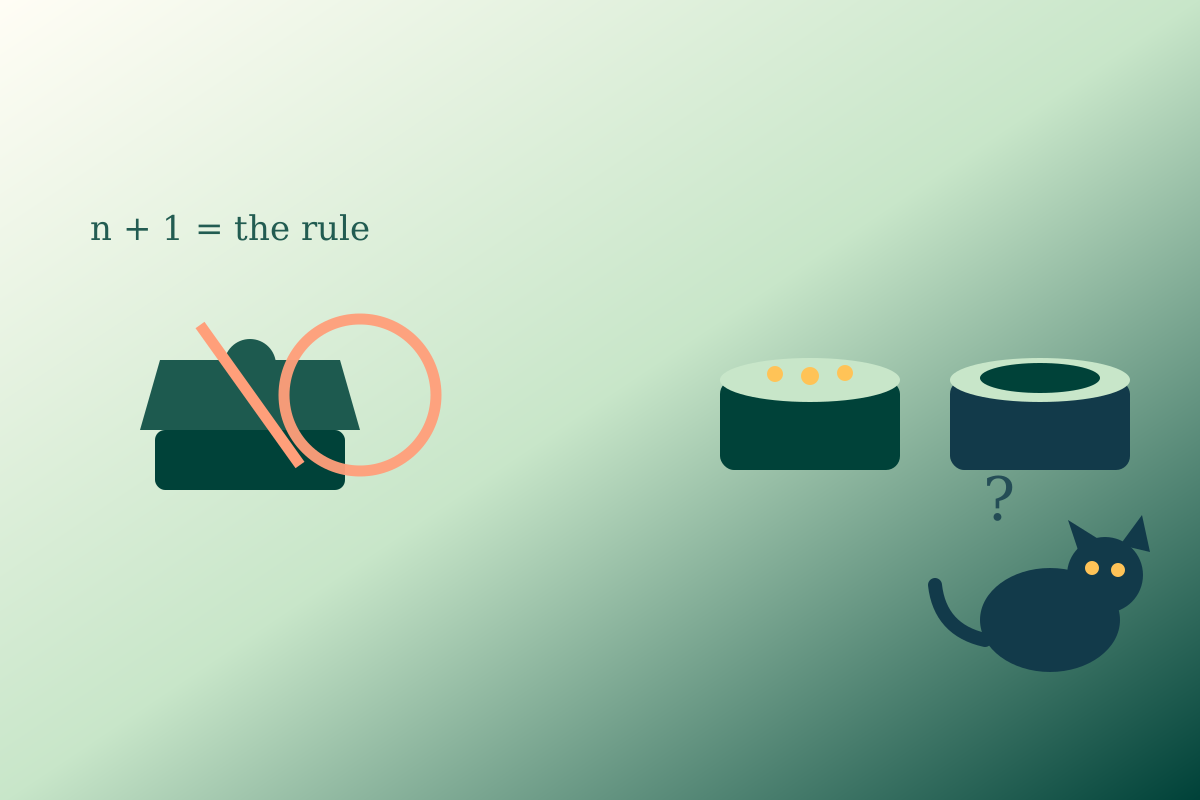
The box math: n+1. One box per cat plus one extra, spread across different rooms — not two boxes side by side (to a cat's social map, that is one giant box, and a bullying housemate can own it). In multi-cat homes, blocked access — an ambush hallway, a closed basement door — is a leading cause.
Litter: unscented, fine, clumping. Preference studies consistently show most cats prefer fine-grained clumping litter and actively avoid scented litter — the perfume humans like is a chemical alarm to a nose ten times sharper. Sudden brand switches cause avoidance; if you must switch, mix old into new over a week.
Scooping: daily, at least. A cat walking into a yesterday's box is a cat considering the couch. This single habit resolves a remarkable share of cases.
Size and shape: big and uncovered. The box should be about one and a half times the cat's body length — the large storage-tote style boxes outperform most 'designer' boxes — and uncovered: lids trap ammonia odor at cat-nose height and create a single-blind entrance that a housemate can guard. Senior cats additionally need at least one low-entry box they can walk into with arthritic hips.
Location: quiet but not cornered. Cats want escape routes; a box in a dead-end corner next to the washing machine's spin cycle is a box with a problem. And never near food and water.
Cleanliness of history: the negative association. A single painful urination (cystitis flare, constipation) in the box can teach the cat that the box itself hurts — the avoidance then outlives the pain. Fix: a brand-new box, new location, different litter, and the pain treated.
Spraying on walls is a different problem (with a different fix)
Urine on vertical surfaces — walls, doors, furniture corners at nose height — is usually spraying, a territorial marking behavior, not box refusal. It spikes in intact cats (neutering resolves the large majority of marking in males), in multi-cat tension, and at outdoor-cat windows (the neighbor's new tomcat is provoking indoor marks). The fixes differ from box problems: reduce the cat count tension (resources in multiple rooms, pheromone diffusers), block window access to outdoor triggers, and clean vertical marks with enzymatic cleaner — regular cleaner leaves the marker that invites re-spraying. Horizontal pee in soft places (laundry, bedding) points back to medical or box-aversion causes instead.
The cleanup that prevents the repeat
Every accident site is a marked site. Enzymatic cleaner on every spot — urine contains proteins standard cleaners leave behind, and cats re-target spots their nose still recognizes. For carpet, soak through to the pad. For laundry, enzymatic detergent. And deny re-targeting for a couple of weeks: foil, a plastic runner nub-side-up, or simply a food bowl placed at the scene (cats do not toilet where they eat). None of this is the fix — it is the stage crew for the real fix, whether that was the vet visit or the new box setup.
When it is the senior cat: arthritis and cognition
An older cat newly missing the box is usually telling you something physical changed: arthritic hips cannot climb the high-sided box (fix: a low-entry box or a cut-down tote), the box moved somewhere the stiff cat no longer travels, or cognitive decline makes the cat forget where things are (fix: more boxes, visible, on the cat's new favorite floor). Senior-onset litter problems are a vet conversation first — the bloodwork that rules out kidney disease and checks for arthritis pain is the visit where the problem usually starts resolving.
FAQ
How many litter boxes does one cat need? Two, in different rooms — the n+1 rule applies to single cats too, and it prevents the ambush-and-own problem before it starts.
What litter do cats actually prefer? Studies and shelter trials consistently favor unscented, fine, clumping litter. Scented litter is for humans, and it is the most common switch that triggers avoidance.
My cat pees in the same spot every day — is it the box? If the box passed the medical check and the checklist, the spot itself has become marked: enzymatic clean, then place a food bowl or foil there for two weeks while the new box setup earns trust.
Is my cat punishing me for something? Cats do not retaliate. Every elimination problem has a physical, environmental or stress cause — 'spite' is the explanation that stops owners from looking for the real one.
The male cat is going to the box constantly and producing little or nothing — how urgent? Drop everything: a blocked urethra becomes fatal within roughly 24–48 hours, and it is one of the most common true emergencies in male cats. This is not a monitor-and-see situation.
Stories about pets, product, and care
Back to blog